Hand Block Printed Cotton Fabric:
A Story of Perfection and Craftsmanship
Some fabrics are made by machines in seconds. Others are made by hand, one impression at a time. Hand block printed cotton belongs firmly in the second group. Every motif carries the pressure of a craftsperson’s palm, and every metre reflects patience that no factory line can copy.
At Rohit International, a Jaipur-based manufacturer and exporter of handcrafted textiles, we have grown up around this heritage. In this guide, we share the story of handblock printed fabric in Jaipur: where it comes from, how it is made, and why it is still loved around the world.
A Tapestry of History
Block printing is one of India’s oldest textile arts. For centuries, artisans in Rajasthan have stamped patterns onto cloth using carved wooden blocks, passing the skill from parent to child. Trends in fashion have come and gone, yet the basic method has barely changed. A block, a tray of colour, and a steady hand are still all it takes.
That continuity is part of the appeal. When you hold a piece of block printed cotton, you hold a technique that connects modern homes and wardrobes to a very long tradition.
Why Jaipur Is the Heart of Block Printing
Jaipur and the villages around it have shaped Indian block printing more than almost any other region. Two nearby centres stand out:
- Sanganer is known for fine, detailed floral motifs, often printed on crisp white or light backgrounds.
- Bagru is known for earthy tones, deep indigo, and the traditional mud-resist technique called dabu.
Because printers, dyers, block carvers, and tailors work in the same region, the whole chain from cloth to finished product stays close together. That closeness helps quality, and it keeps traditional knowledge alive.
Artistry in Motion: The Wooden Blocks
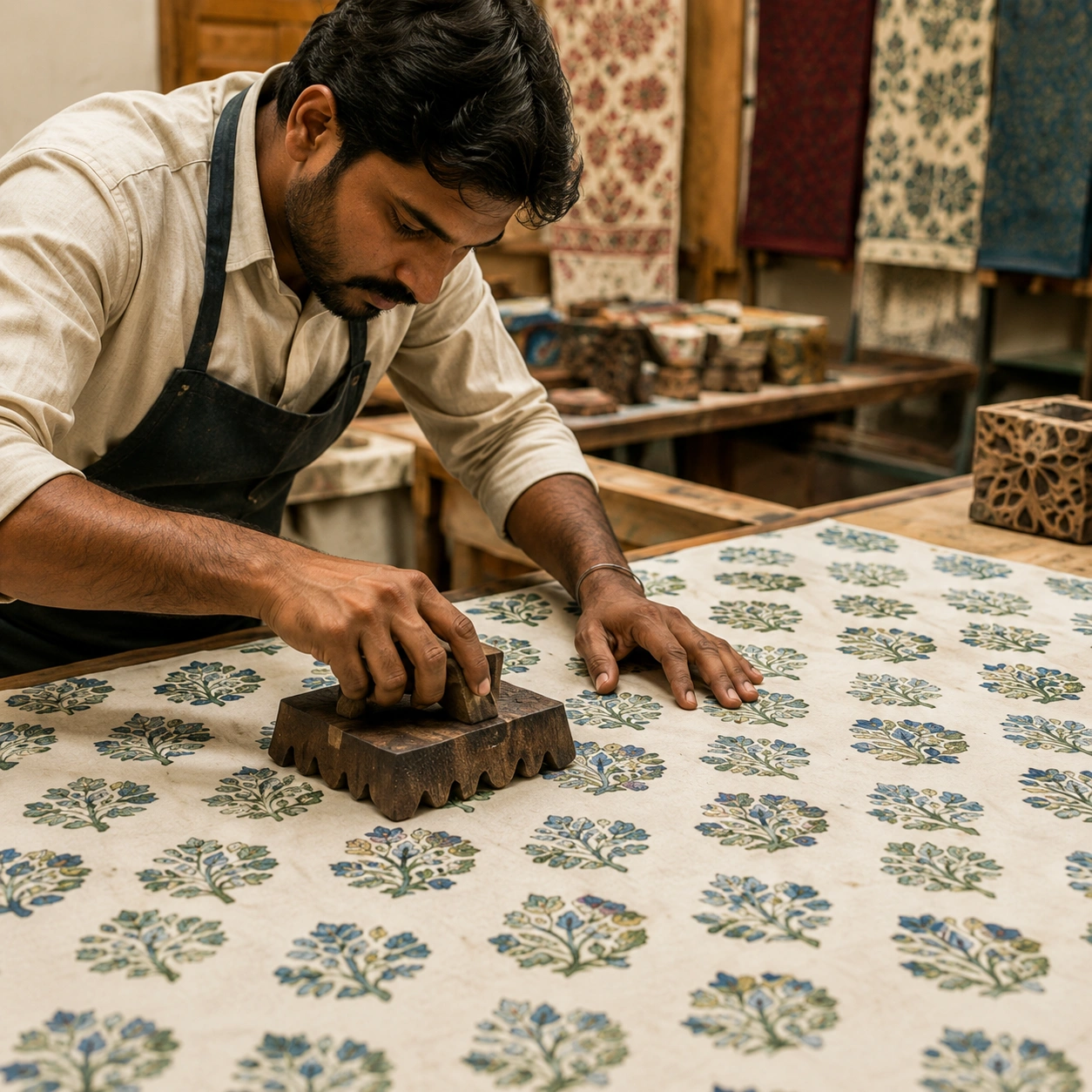
Every print begins with a block. Artisans carve designs by hand into seasoned wood, cutting fine lines and shapes into the surface with chisels and small tools. A complex pattern may need several blocks, one for the outline, another for the fill, and a third for the finer details.
Carving is a specialist skill, and it directly decides how sharp the final print looks. A well-made block can be used again and again, and over time it becomes a trusted tool in the printer’s hands.
A Labour of Love: How Handblock Printed Fabric in Jaipur Is Made
Behind every finished metre of fabric is a careful, multi-stage process. Here is how it typically works:
- Preparing the cloth: Raw cotton is washed to remove starch and impurities, so it takes dye evenly.
- Mixing the colours: Dyes are prepared and placed in shallow trays. The printer tests the shade before starting.
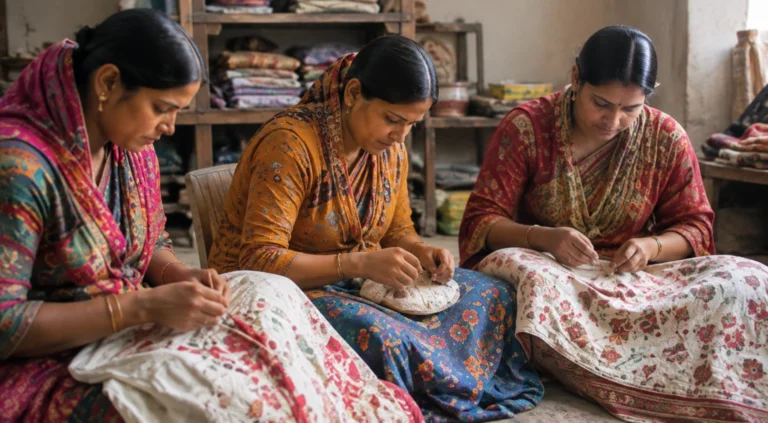
- Printing by hand: The cloth is stretched flat on a long table. The printer presses the block into the dye, then stamps it firmly onto the fabric. Small guide marks help line up each impression with the last.
- Repeating the pattern: This continues across the whole length of cloth, and complex designs are built up in layers, one colour at a time.
- Drying and fixing: The fabric is dried, often in open air under strong Rajasthan sunlight, and then treated so the colours hold.
- Washing and finishing: Extra dye is washed away, and the cloth is dried again and checked.
Producing handblock printed fabric in Jaipur takes time. A single long design can take many hours or days, depending on the complexity, which is why the fabric is so valued. There are no shortcuts, only skill built up over years.
Perfection in Imperfection
There is a common misunderstanding about handmade prints. People often expect perfection to mean identical repetition, but true craftsmanship works differently.
Because every motif is stamped by a person, tiny variations appear: a slightly softer edge here, a small shift in spacing there. These are not defects. They are proof that the fabric was made by hand, and they give each piece its warmth and character. Machine prints look flat by comparison, because they lack this human touch.
The real perfection lies in the skill: even pressure, careful alignment, and rich colour across metres of cloth.
An Eco-Friendly Choice
More buyers today care about how their textiles are made. Hand block printing fits that mindset well:
- Cotton is a natural fibre, breathable, comfortable, and biodegradable.
- Hand printing uses very little machinery, so the process needs far less energy than large industrial printing.
- Natural dyes are still used in many traditional workshops, including plant-based and mineral colours, especially in Bagru-style printing.
- Well-made fabric lasts longer. Good cotton improves with washing and use, which means fewer replacements over time.
Not every block printed product uses natural dyes, so it is always worth asking your supplier what dyes and finishing methods they use.
Buying Handblock Printed Fabric in Jaipur: What to Look For
Whether you are shopping for your home or sourcing for a brand, a few checks will help you spot genuine work:
- Look closely at the print: Hand printing shows small, natural variations. Perfect mechanical repetition is a warning sign.
- Check the back of the fabric: On real block prints, the dye usually soaks through, so the reverse side shows the pattern too.
- Feel the cloth: Good cotton feels soft and breathable, without a stiff or plastic coating.
- Test colour quality: Ask about colour fastness and washing instructions.
Ask about the source. A trustworthy supplier can tell you where and how the fabric was printed.
Where Block Printed Cotton Shines
Hand block printed cotton is versatile, and that is a big reason for its lasting popularity. It works beautifully in:
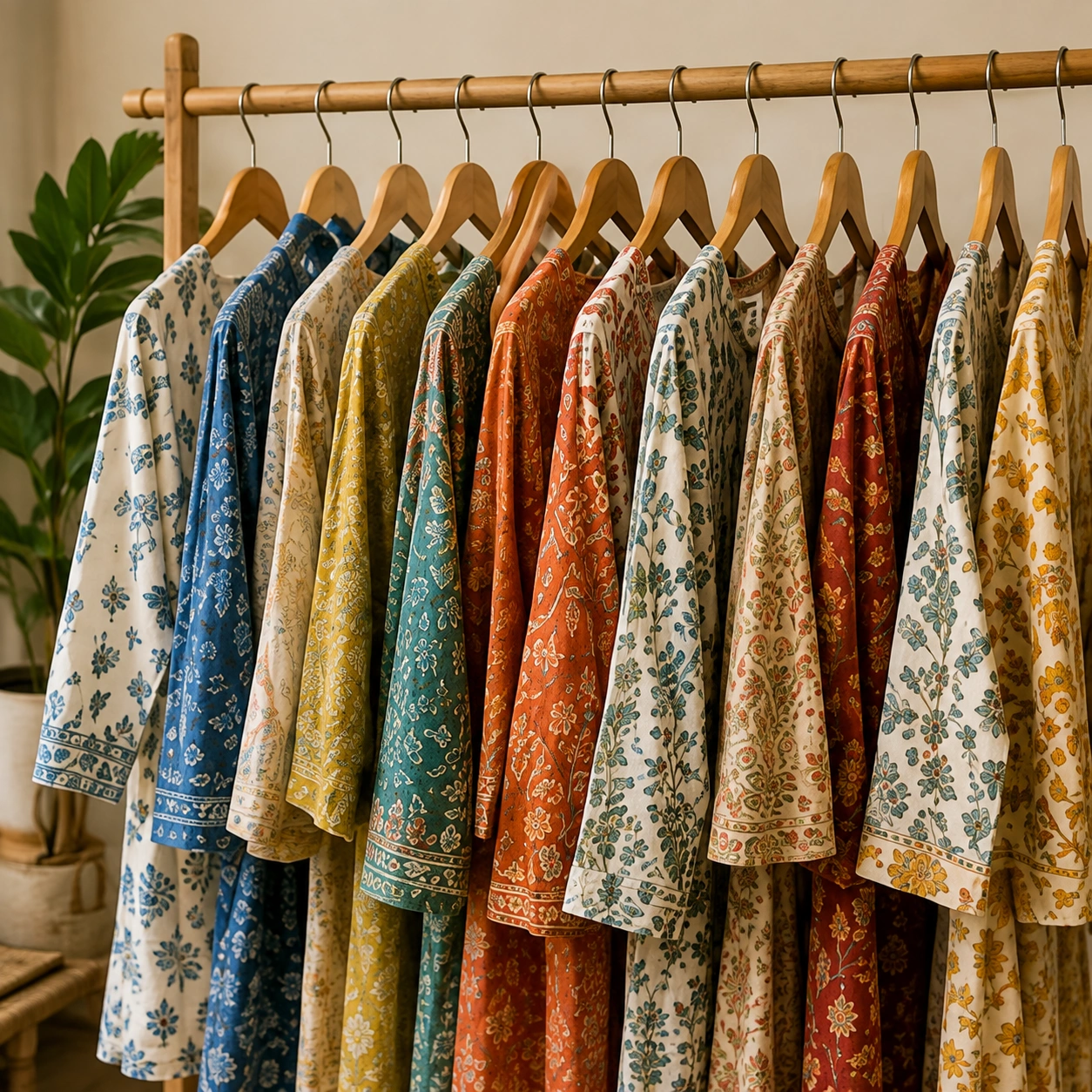
- Garments such as dresses, tops, scarves, and jackets
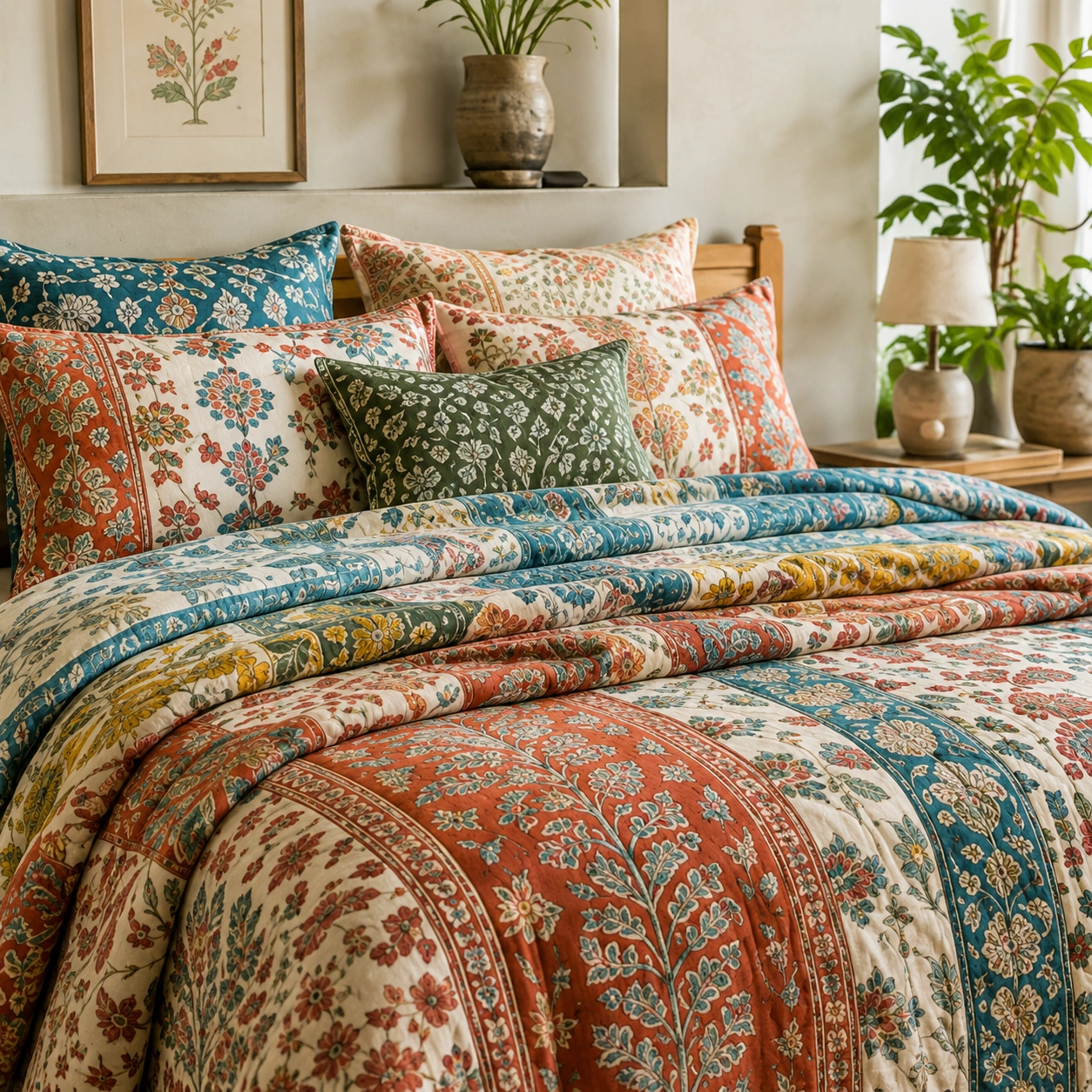
- Home textiles like table linens, cushions, and bedcovers
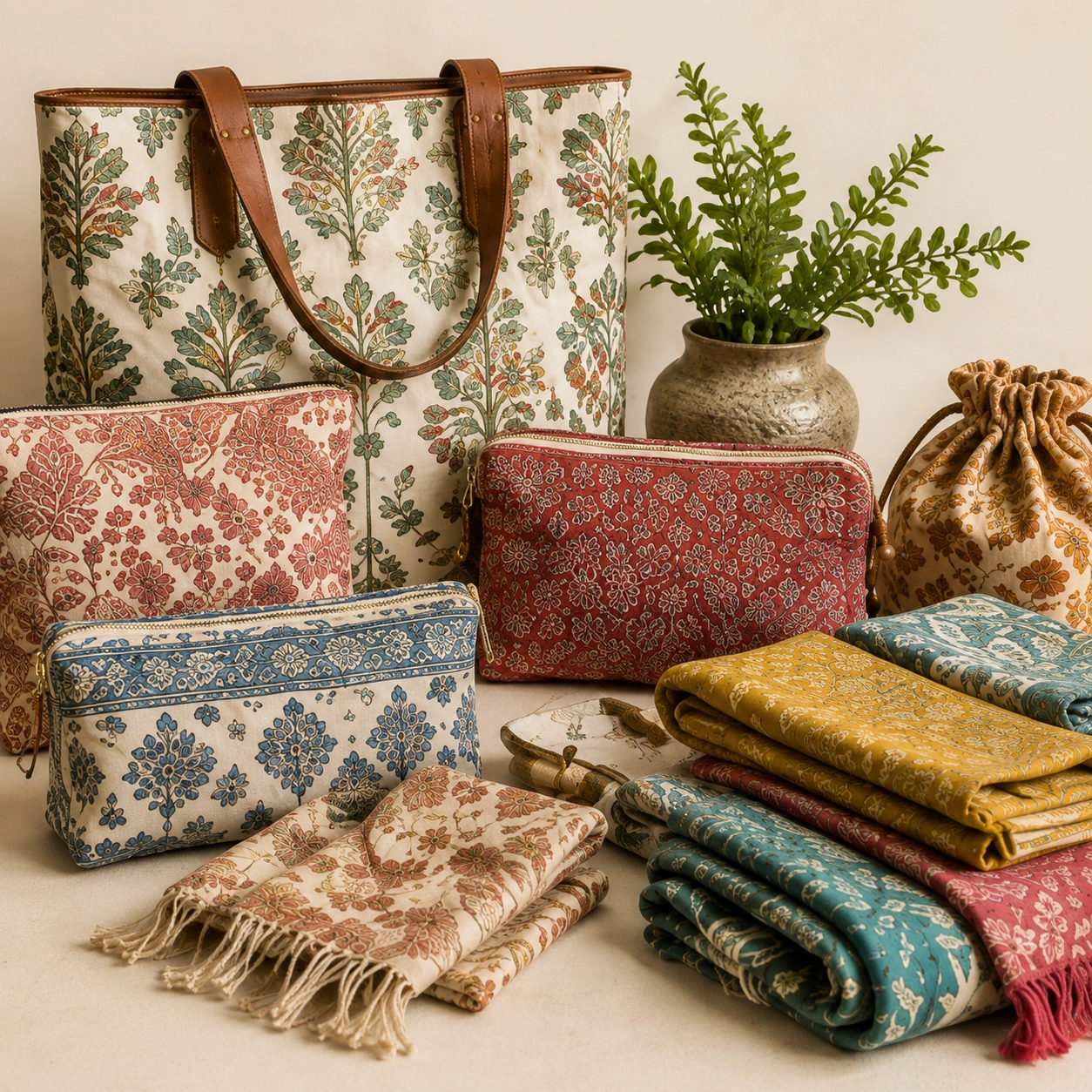
- Accessories including tote bags and pouches
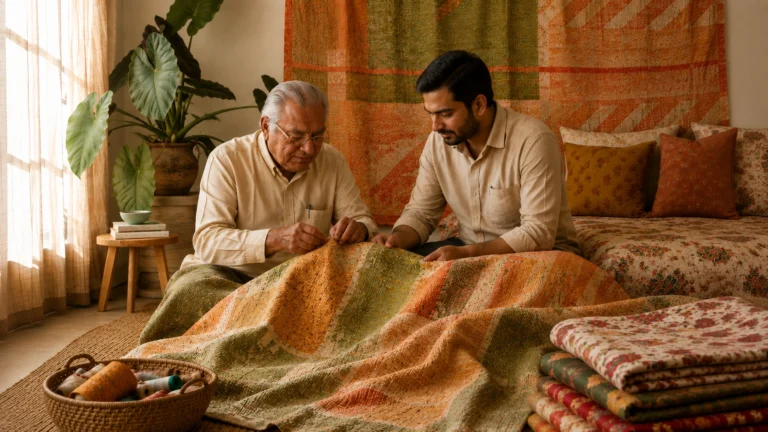
- Quilts and layered textiles, where printed cotton adds pattern and warmth
Because the prints range from delicate florals to bold geometrics, the same technique can suit both classic and contemporary styles.
Custom Block Printed Textiles for Brands and Importers
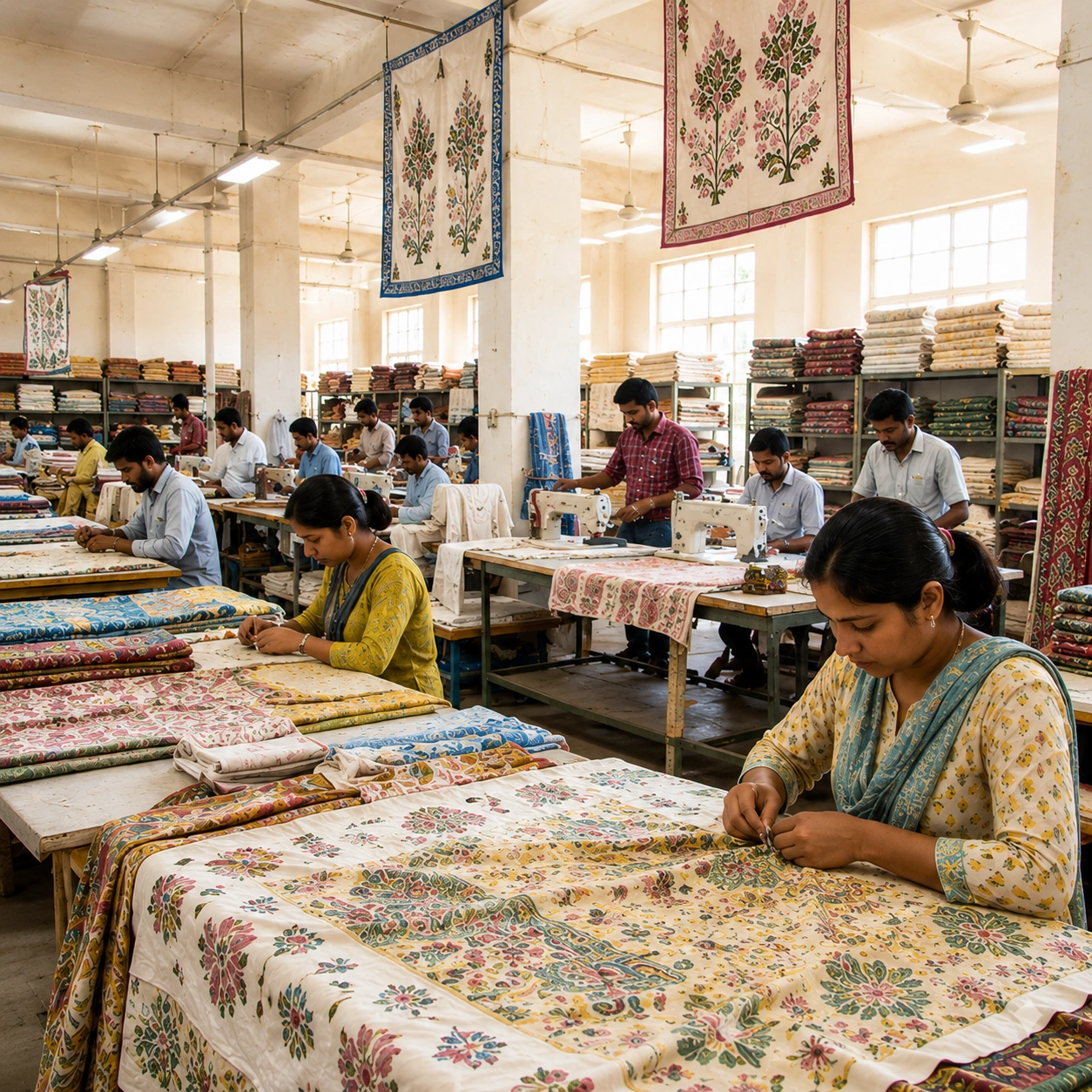
Beyond our own collections, Rohit International works with global brands, importers, and businesses on custom designs, sampling, and finished production. If you are planning a range that features hand block printed cotton, we can discuss fabrics, colours, and product types, and start with samples so you can review quality before bulk production.
Our 40,000-square-foot facility in the Mansarovar Industrial Area, Jaipur, follows a structured process covering fabric inspection, cutting, stitching, finishing, quality control, packing, and dispatch. This helps us keep quality consistent while respecting the handmade nature of every piece.
Conclusion
Hand block printed cotton is more than a pattern on cloth. It is a story of skilled carving, patient printing, natural materials, and generations of shared knowledge. Each piece carries the mark of the people who made it, and that is what makes it special. If you are looking for genuine handblock printed fabric in Jaipur, crafted with care and ready for global markets, we would be glad to help. Contact us today!
FAQs About Hand Block Printed Cotton Fabric
What is hand block printed cotton fabric?
It is cotton cloth decorated by stamping designs with carved wooden blocks dipped in dye. The printer presses each block by hand, one impression at a time, which gives the fabric its texture and character.
Why is Jaipur famous for block printing?
The nearby centres of Sanganer and Bagru have practised block printing for centuries. Block carvers, printers, dyers, and tailors work in the same region, so skills and quality standards stay strong.
How can I tell hand block print from machine print?
Look for small natural variations in spacing and edges. On hand-printed cloth, the dye often shows through on the reverse side. Machine prints usually look perfectly uniform and are often lighter on the back.
How do I wash block printed cotton?
Wash gently in cold water with a mild detergent, and wash it separately for the first few times, as some colour may bleed. Dry it in the shade rather than in harsh sun, and avoid bleach. Always check the care label too.
Which products can be made from block printed cotton?
It suits garments such as dresses, tops, and scarves, home textiles such as table linens, cushions, and bedcovers, and accessories such as tote bags and pouches. The same fabric can also be used in quilts.
TRUSTED BY BUSINESSES WORLDWIDE.
A PARTNER WE CAN RELY ON.
“Rohit International consistently delivers exceptional quality and craftsmanship. Their team understands our requirements, communicates clearly and always delivers on time. We value our long-term partnership and highly recommend them.”
A PARTNER WE CAN RELY ON.
“Rohit International consistently delivers exceptional quality and craftsmanship. Their team understands our requirements, communicates clearly and always delivers on time. We value our long-term partnership and highly recommend them.”
A PARTNER WE CAN RELY ON.
“Rohit International consistently delivers exceptional quality and craftsmanship. Their team understands our requirements, communicates clearly and always delivers on time. We value our long-term partnership and highly recommend them.”