Why Tote Bags Are a Must-Have in 2026: Style, Comfort & Everyday Versatility
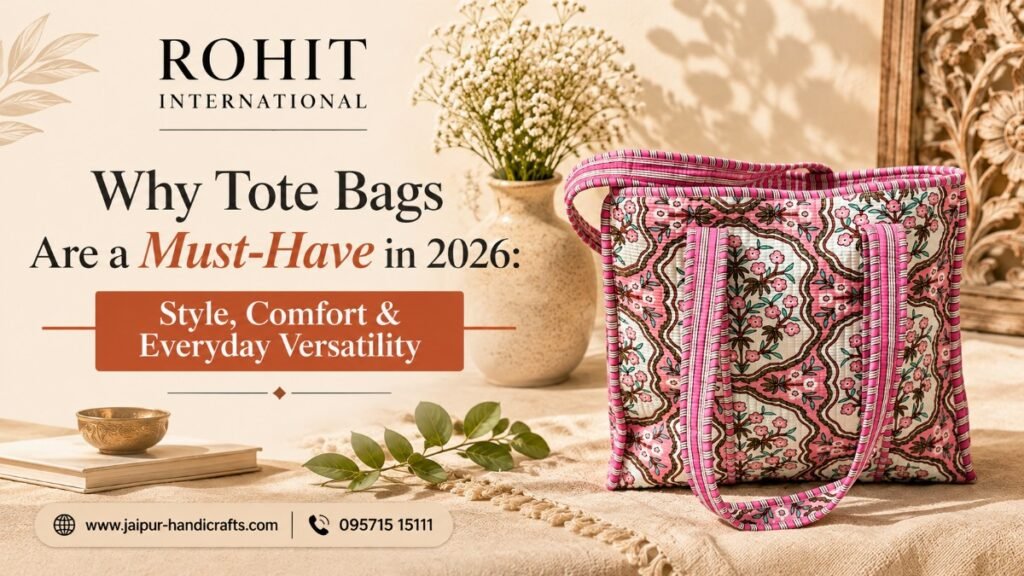
Why Tote Bags Are a Must-Have in 2026: Style, Comfort & Everyday Versatility Fashion trends change every season, but a few accessories never leave the wardrobe. The tote bag is one of them. It is roomy, easy to carry, and simple to style, which is why so many people reach for one every day in 2026. Whether you are heading to work, college, the market, or the airport, a good tote quietly does the job of two or three smaller bags. There is also a growing appreciation for bags with a story. Handcrafted tote bags in Jaipur, for example, combine skilled stitching with the region’s rich textile heritage. At Rohit International, a Jaipur-based manufacturer and exporter of handcrafted textiles and lifestyle accessories, we make tote bags for customers and brands around the world. Here is why the tote has earned its place as a must-have this year. Request a Quote What Makes Tote Bags So Popular? The biggest strength of a tote bag is its versatility. A small handbag holds only a few essentials, while a tote can carry a wallet, phone, water bottle, notebook, sunglasses, a pouch, and more, all in one open, easy-to-reach space. That mix of function and fashion suits almost every lifestyle. A simple cotton tote works for a relaxed day out, while a structured or quilted tote can give an office outfit a polished finish. One bag, many roles: that is the real reason totes keep winning. 1. Spacious Enough for Everyday Essentials Modern days often ask us to carry more than we expect. A roomy tote means you don’t need a separate bag for work, a second one for shopping, and a third for the gym. Students can carry books and stationery, professionals can pack a laptop sleeve and notebook, and travellers can keep passports, chargers, and snacks within reach on short trips. When choosing, match the size to your routine: larger for work and shopping, medium for everyday outings. 2. Easy to Style With Different Outfits Tote bags do not belong to one fashion style. They pair just as well with jeans and a tee as with a kurta, a cotton dress, or tailored trousers. For a relaxed look, a printed or fabric tote adds personality to a plain outfit. For office wear, a neutral tote in beige, black, or grey blends in easily. If your wardrobe is mostly neutral, a bold pattern or bright colour can become the accent of the whole look. 3. A Sustainable Choice for Shopping Reusable bags have become an everyday habit for many shoppers, and the tote is the natural choice. A sturdy fabric tote can replace dozens of single-use plastic bags over its lifetime. Many totes also fold flat, so you can keep one inside another bag and use it whenever you need it. The key is to choose a well-made bag and use it often. A durable tote that lasts for years is far better than one that is used twice and thrown away. Explore Bags 4. Different Materials for Different Needs Part of the tote’s appeal is the range of materials available: Cotton and canvas are lightweight, breathable, and casual. Quilted cotton adds softness, body, and a little structure. Jute is strong and earthy, ideal for shopping and beach days. Faux leather gives a sleek look for work and evenings out. Think about how and where you will use the bag. For daily errands, a light fabric tote is easy and practical. For meetings or formal outfits, a structured design may suit you better. 5. Handcrafted Character: Why Tote Bags in Jaipur Stand Out Machine-made bags can look identical, one after another. Handmade tote bags in Jaipur feel different. They are shaped by skilled local artisans, working within the textile traditions Rajasthan is known for, such as quilting, embroidery, and printing. Because people, not machines, guide the needle, small variations appear from piece to piece. These are not flaws. They are the marks of handcraft, and they give each bag warmth and individuality. It is also why buyers around the world increasingly look to Jaipur for bags with real character. 6. Great for Work, Travel and Casual Outings A good tote moves easily through your day. Carry it to the office in the morning, use it for shopping after work, and take it along when you meet friends in the evening. For short trips, a larger tote keeps travel essentials close and easy to find. This ability to go from one setting to the next is what makes a tote such a useful part of a modern wardrobe. How to Choose the Right Tote Bag Looks matter, but a great tote is also about construction. Before you buy, check these points: Size: Make sure it fits your daily items comfortably. Handles: Look for strong, well-attached straps of a comfortable length. Stitching: Straight, even seams, with extra reinforcement where handles meet the bag. Closure: A zip or magnetic snap keeps belongings secure in crowds or on the move. Pockets: Inside pockets help keep small items organised. Colour: Neutral shades go with almost everything, while prints add personality. If you carry heavy items regularly, put strong handles and solid stitching ahead of everything else. Buying Tote Bags in Jaipur for Your Brand or Store Retailers and brands increasingly look for handcrafted totes to add character to their ranges. Rohit International works with global brands, importers, and businesses on custom designs, sampling, and finished production, so you can shape a tote that fits your customers. You can discuss options such as: Sizes, shapes, and handle styles Fabric, colour, and quilting choices Labels, tags, and other branding details Sampling before bulk production Packing suited to your market Our 40,000-square-foot facility in the Mansarovar Industrial Area, Jaipur, follows a structured process covering fabric inspection, cutting, stitching, finishing, quality control, packing, and dispatch. That keeps quality consistent while respecting the handmade nature of every bag. Connect With us Tote Bags: A Blend of Fashion and Functionality The popularity of
Behind the Craft: How Our Tote Bags Are Made in Jaipur
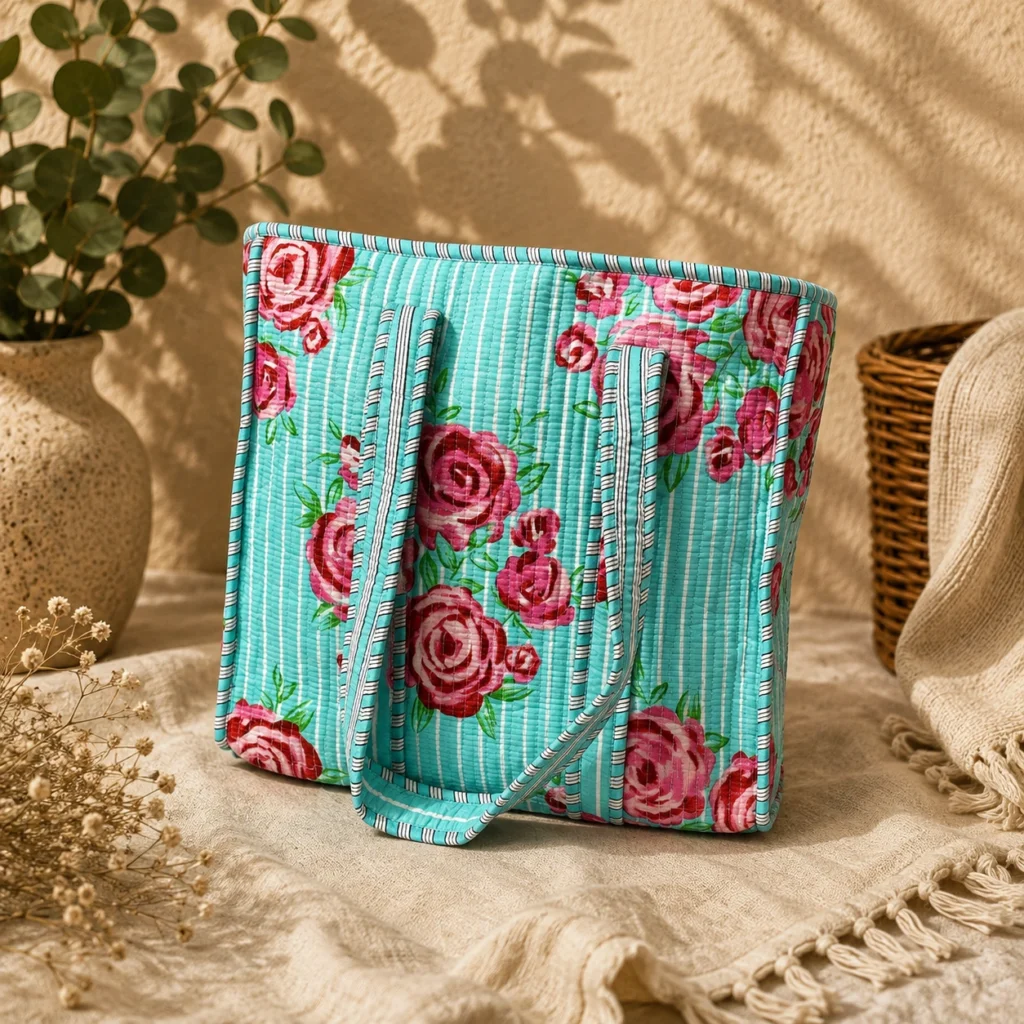
Behind the Craft: How Our Tote Bags Are Made in Jaipur Every handmade tote bag starts as a roll of fabric and ends up in someone’s daily life. Between those two points sits a careful mix of skilled hands, simple tools, and strict checks. In this guide, we walk you through how we make tote bags in Jaipur, step by step. The process comes from Rohit International, a family-led manufacturer and exporter whose journey began in 1966 in Gadra Road, Barmer, Rajasthan, with a passion for Kantha and traditional Indian crafts. Whether you are a shopper curious about what goes into your bag or a buyer looking for a reliable tote bag manufacturer, here is what happens behind the scenes. Request a Quote Why Jaipur Is a Hub for Handcrafted Tote Bags Jaipur has long been a centre for Rajasthan’s textile heritage. Skilled tailors, quilters, embroiderers, and finishing teams live and work in the same city. That makes it a natural base for handcrafted textiles and lifestyle accessories. This local network matters. When fabric, stitching, and finishing skills sit close together, production runs smoothly and quality stays consistent. Our 40,000-square-foot facility in the Mansarovar Industrial Area brings these skills together. A bag moves through a clear, structured process, from the first fabric check to the final dispatch. The tote bag manufacturing process has seven main stages. Here is each one. Step 1: Fabric Selection and Inspection Everything begins with the fabric. A tote bag is only as good as the cloth it is made from. So we choose fabric based on how the bag will be used: lightweight cotton for everyday carry, sturdier weaves for shopping and travel, or layered cotton for quilted styles. Before any cutting begins, the fabric is inspected. Our team checks for: Weaving flaws, holes, and uneven texture Colour consistency across the roll Stains or marks that could show on the finished bag Shrinkage and colour fastness, where the order requires it Catching problems at this stage saves time later and protects the quality of the final product. Step 2: Design, Pattern Making and Sampling Next, the idea takes shape. Some designs come from our own collections, while others begin with a brief from a brand or importer. Size, shape, handle length, pocket layout, and surface style are all planned at this stage. A pattern is then made and a sample is stitched. Sampling lets you see and handle the bag before you commit to a full order. You can check the size, stitching, and feel, and ask for changes. Only after approval do we move to bulk production. Step 3: Precision Cutting Approved fabric is laid out and cut to pattern. Accurate cutting affects everything that follows, because pieces that are even slightly off will not sit right once stitched. Careful layout planning also reduces fabric waste, which is good for your budget and better for the environment. Each cut piece is then bundled and sorted, ready for the stitching team. Step 4: Stitching and Quilting Tote Bags in Jaipur This is where the bag truly comes to life. At Rohit International, skilled stitchers join the body, sides, and base, then add handles and, where the design calls for it, a lining. Quilted styles have an extra layer. Cotton layers are stitched together to create a fabric that is soft, light, and sturdy at the same time. Our roots in Kantha shape how we think about stitching: patient, textured, and made to last. Handles take the most strain, so stress points, such as where the straps meet the bag body, are reinforced with extra stitching. Step 5: Finishing Touches Finishing is what separates a good tote bag from a great one. Loose threads are trimmed, seams are neatened, edges are pressed, and details such as pockets, closures, or labels are added where the design needs them. This is also where the handmade character shows. Small differences in stitching or texture are not flaws. They are proof that a person made the bag, and that is what makes handmade tote bags in Jaipur so different from mass-produced ones. Step 6: Quality Control Every bag is checked before it leaves the floor. Quality control is not a single inspection at the end. It happens at several stages, from raw fabric to finished piece. Inspectors look at: Stitching strength and straight seams Handle attachment and load-bearing points Measurements against the approved sample Colour, cleanliness, and overall appearance Bags that miss the standard are corrected or set aside. This keeps every batch consistent, whether the order is small or large. Step 7: Packing and Dispatch Once a bag passes inspection, it is folded, counted, and packed to the buyer’s requirements. Depending on the order, this can include individual polybags, hang tags, labels, and export cartons. Careful packing protects the bags in transit and makes them shelf-ready on arrival. Finally, dispatch is planned around agreed timelines. Reliable delivery matters as much as good stitching, especially for retailers planning a season. The Artisans Behind Every Tote Bag Behind each step is a person with years of practice. Three generations of our family work alongside our artisans and team. Together they preserve traditional techniques while bringing fresh ideas and modern designs to every collection. For us, handmade products are more than beautiful textiles. They represent Indian culture, artisan skills, and generations of craftsmanship. Supporting artisan communities is part of that commitment, and it is why we take pride in every piece that leaves our facility. Custom Tote Bags for Brands and Importers Alongside our own collections, we work with global brands, importers, and businesses on custom designs, sampling, and finished production. If you are planning a wholesale or private label range, you can discuss: Custom sizes, shapes, and handle styles Fabric, colour, and quilting choices Branding details such as labels and tags Packing suited to your market Tote bags are just one part of what we make. Our range also covers pouches, scarves, quilted jackets, bedcovers, table linens, and other handcrafted